 Bill Griffith. Photographic Memory: William Henry Jackson and the American West. New York. Abrams ComicArts. 2025. 288 pp. $35.
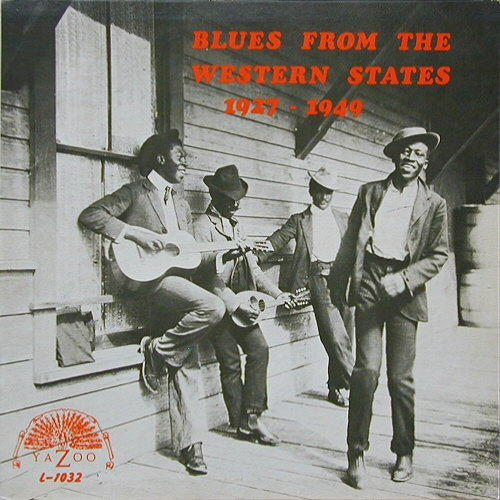
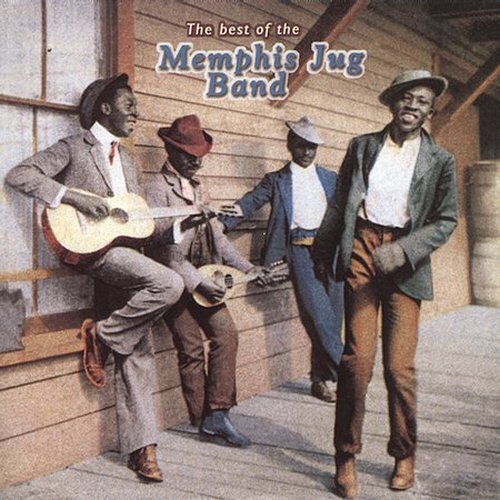
I first saw a photograph by William Henry Jackson (1843–1942) when I was a teenager, but I didn’t know it was his: Jackson’s 1902 photograph Waiting for the Sunday Boat appeared, uncredited, on the cover of the 1972 Yazoo LP Blues from the Western States: 1927–1949. Yazoo used a color-tinted version of the photograph for the cover of the 2001 CD The Best of the Memphis Jug Band. Perhaps Jackson is credited there.
From early childhood Bill Griffith was aware of his great-grandfather’s accomplishments. Griffith — William Henry Jackson Griffith — was named for his great-grandfather and went through school, or at least through much of it, as the only kid in the class with four names. (And when he saw a Jackson photograph in his junior-high history textbook, he knew what he was seeing.) Griffith’s graphic biography tracks the life and work of a peripatetic photographer and painter who played a crucial role in shaping the idea of the American West.
In his early years in New York and Vermont, Jackson worked as a commercial illustrator and photograph retoucher. He served with the Union Army before leaving the northeast for life out west, where he became a prolific commercial photographer, taking thousands of pictures of sights along the Union Pacific railroad route, photographing indigenous peoples, and working with a mapping survey of Wyoming. He was the first person to photograph the geyser Old Faithful, and his documentation of a mythical landscape of “grottoes and geysers and boiling sulphur fountains” played a major role in establishing Yellowstone as the first national park in 1872. In 1874 Jackson took the first photographs of Colorado’s Mesa Verde, a site designated a national park in 1906. Among his other projects: documenting the 1893 Columbian Exposition, working as a photographer with a multi-year study of transportation systems around the world, and pioneering the color picture-postcard. And he found time to finish writing Time Exposure, an autobiography that he began before the Civil War and published in 1940.
Jackson is celebrated as a photographer whose work opened up the American West: he can be thought of as having served the cause of Manifest Destiny. Griffith shows great admiration for Jackson, but he is also ambivalent about the way Jackson’s photographs represent indigenous cultures in the United States and abroad, commodifying them as exotic curiosities for white eyes to gaze upon (a matter that gets, Griffith points out, short shrift in all but one biography of Jackson). As Griffith, depicted as usual in a vest and bolo tie, walks through an Egyptian landscape musing on these matters, his Uncle Al, Jackson’s grandson, appears in front of the Great Sphinx: “Hold it right there with this revisionist nonsense!” And Uncle Al heads out to talk to his local newspaper about “Grandpa’s pioneering spirit and his amazing adventures in the Wild West.” “Hey, someone has to keep the legend going!” says Griffith. Admiration and ambivalence are here in uneasy put peaceful coexistence.
Anyone who follows Zippy is familiar with Griffith’s artistry. It’s here in abundance: in the cover illustration, in the maps on the endpapers, in drawn versions of photographs, in panoramic landscapes, in the streetscapes through which the nonagenarian Jackson walks with Elwood P. Bonney, a collector of western memorabilia who had the good sense to document their many conversations. Like Griffith’s previous books — Invisible Ink, Nobody’s Fool, and Three Rocks — this one is marked by deep research, drawing upon archival materials and published scholarship. And there’s fun, with Griffith motifs appearing here and there: a diner, an Automat, a muffler man, an old comic-strip character (Mickey Dugan, the Yellow Kid), and a polka-dot-clad proto-Zippy in a 1904 Jackson photograph of Coney Island. The narrative closes not with Jackson’s death but with a final “surreal yet reality-based” scenario that joins Yellowstone and Yogi Bear’s Jellystone, followed by fifteen full-page reproductions of Jackson’s photographs, including Waiting for the Sunday Boat .
 [William Henry Jackson, Waiting for the Sunday Boat. Florida. 1902. From the Library of Congress. Click for a larger view.]
Further reading
WHJ in Zippy : 1, 2, 3 (With Waiting for the Sunday Boat )
OCA posts about Invisible Ink , Nobody’s Fool , and Three Rocks
Monday, February 16, 2026
Bill Griffith’s Photographic Memory

Subscribe to:
Post Comments (Atom)


comments: 0
Post a Comment
I moderate comments to avoid spam. Please be patient. Thanks.